
Hems
Occasionally a garment’s knitted edges are left without bands of any kind and are simply allowed to roll, but most of the time there will be ribbing, a band, or a hem. These finish the edges nicely, and prevent them from rolling or curling up. In this section we will cover the three most common hems made on the LK 150 knitting machine. These can be found on hats, slippers, gloves and mittens, sweaters, etc; in fact, just about any place a neat, folded edge is appropriate.
Folded Hem
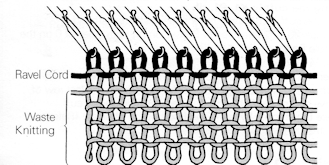
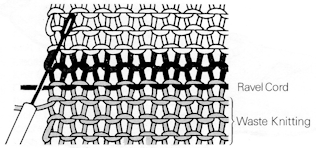
Cast on 20 stitches with waste yarn. Knit 8 rows. Clip waste yarn and knit 1 row of ravel cord.
Thread carriage with main yarn, and set the stitch dial 1 number tighter than main garment tension. (If the pattern says to use Tension 5, set the dial to 4.) Knit 16 rows. Remove the cast on comb, and weights if you have been using them.
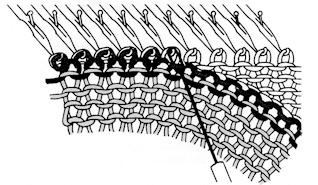
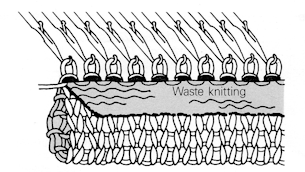
Hold the cast on edge up to the needle bed. Fold the waste yarn section down toward you; it should be on the outside of the fabric. Pick up the sinker loops (also frequently called purl bumps) and hang them into the hooks of the corresponding needles. There are now two stitches in each needle and the fabric is double-layer on the machine.
Turn the stitch dial up 2 numbers (6,in this instance.) Knit 1 row. Set stitch dial to 5.
Knit another 20 rows, clip the yarn, and remove the sample from the machine. Pull out the ravel cord to remove the waste yarn section.
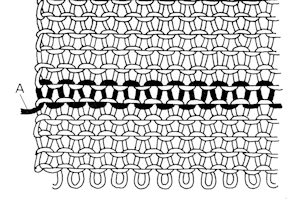
Picot Hem
Cast on 21 stitches with waste yarn. Knit 8 rows. Clip waste yarn and knit 1 row of ravel cord. Remove ravel cord from the yarn feeder.
Thread carriage with main yarn, and set the stitch dial 1 number tighter than main garment tension. (If the pattern says to use Tension 5, set the dial to 4.) Knit 8 rows.
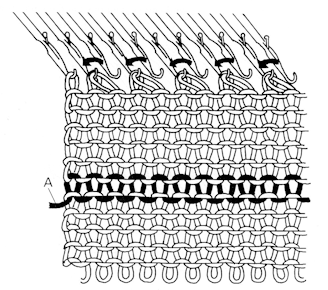
Beginning with the third stitch from the left edge, transfer every other stitch to the adjacent needle on the left. Be sure all of the emptied needles are back in position B so they will knit on the next row.
Even though the illustration shows the last stitch on the right edge being moved, this really is not a good idea. It leaves a small hole on the edge when sewing up the side seam. It is much better to have a stitch on both edge needles, even if it is necessary to add an extra stitch when casting on. This extra stitch can be decreased after completing the hem. Knit a few rows after picking up the live stitches to close the hem, then decrease the extra stitch
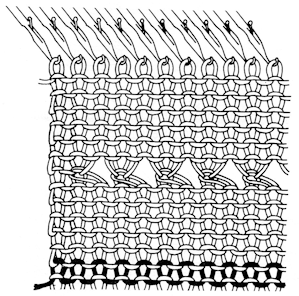
Knit another 8 rows.
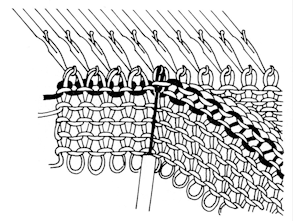
Hold the cast on edge up to the needle bed. Fold the waste yarn section down toward you; it should be on the outside of the fabric. Pick up the sinker loops (also frequently called purl bumps) and hang them into the hooks of the corresponding needles. There are now two stitches in each needle and the fabric is double-layer on the machine.
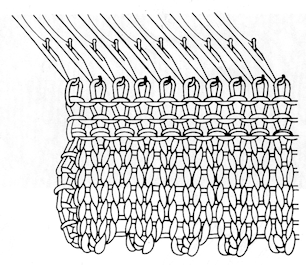
Turn the stitch dial up 2 numbers (6, in this instance.) Knit 1 row. Set the stitch dial to 5. Knit another 20 rows, clip the yarn, and remove the sample from the machine. Pull out the ravel cord to remove the waste yarn section.
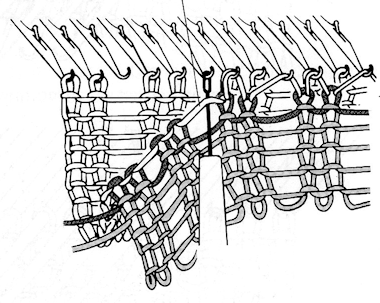
Set the stitch dial to 3. Cast on with waste yarn and ravel cord. Knit 20 rows. Hold the cast on edge up to the needle bed. Fold the waste yarn section down toward you; it should be on the outside of the fabric. Pick up the sinker loops (also frequently called purl bumps) and hang them into the hooks of the appropriate needles. The long main color strand from the first row of main color should go onto the empty needle; the short loop should go on the next needle.
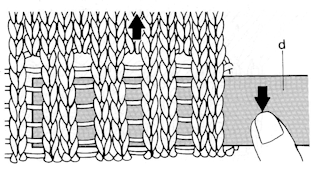
Set the stitch dial to 5. Knit 20 rows. Clip the yarn and remove the sample from the machine. Pull out the ravel cord, and the waste yarn will fall away.
Insert a ruler or rod through the hem. Pull down firmly to bring the fabric together and set the hem stitches.
Return to LK 150 tutorial index
This tutorial was copyrighted and uploaded to the original Clearwater Knits website in 1997. It was updated in 2017.